XPS Shortboard
Hand-shaped XPS foam shortboard with epoxy/fiberglass laminate — August 2020
Board Design
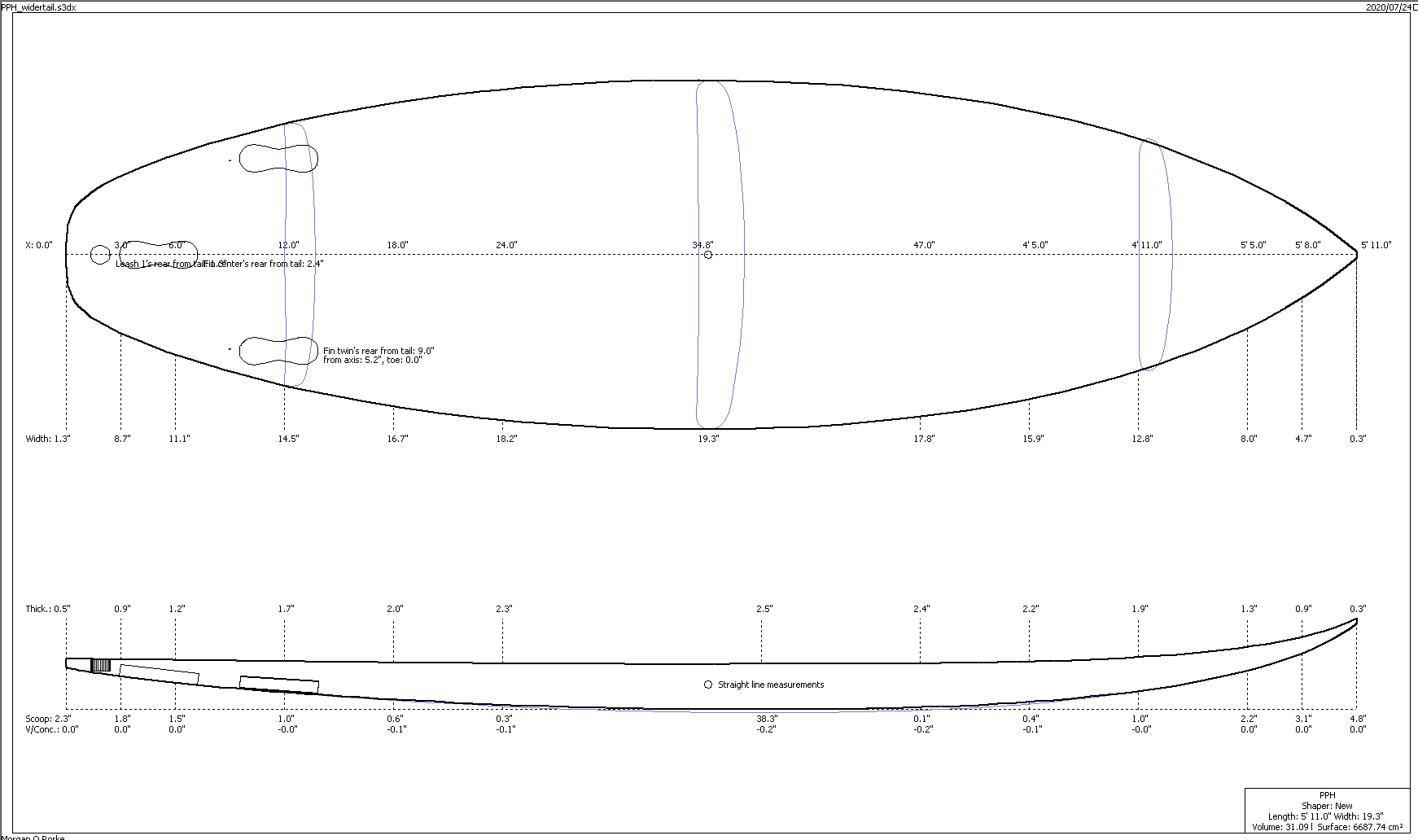
To aid in ending a 5-year surfing hiatus, I wanted a shortboard with a bit more volume while still being short enough to make late drops at hollow New England beach breaks. I pulled a file from the Shape3d Warehouse and made small adjustments to dimensions and curves. Fin positioning followed Greenlight's standard thruster templates.
Making the Blank
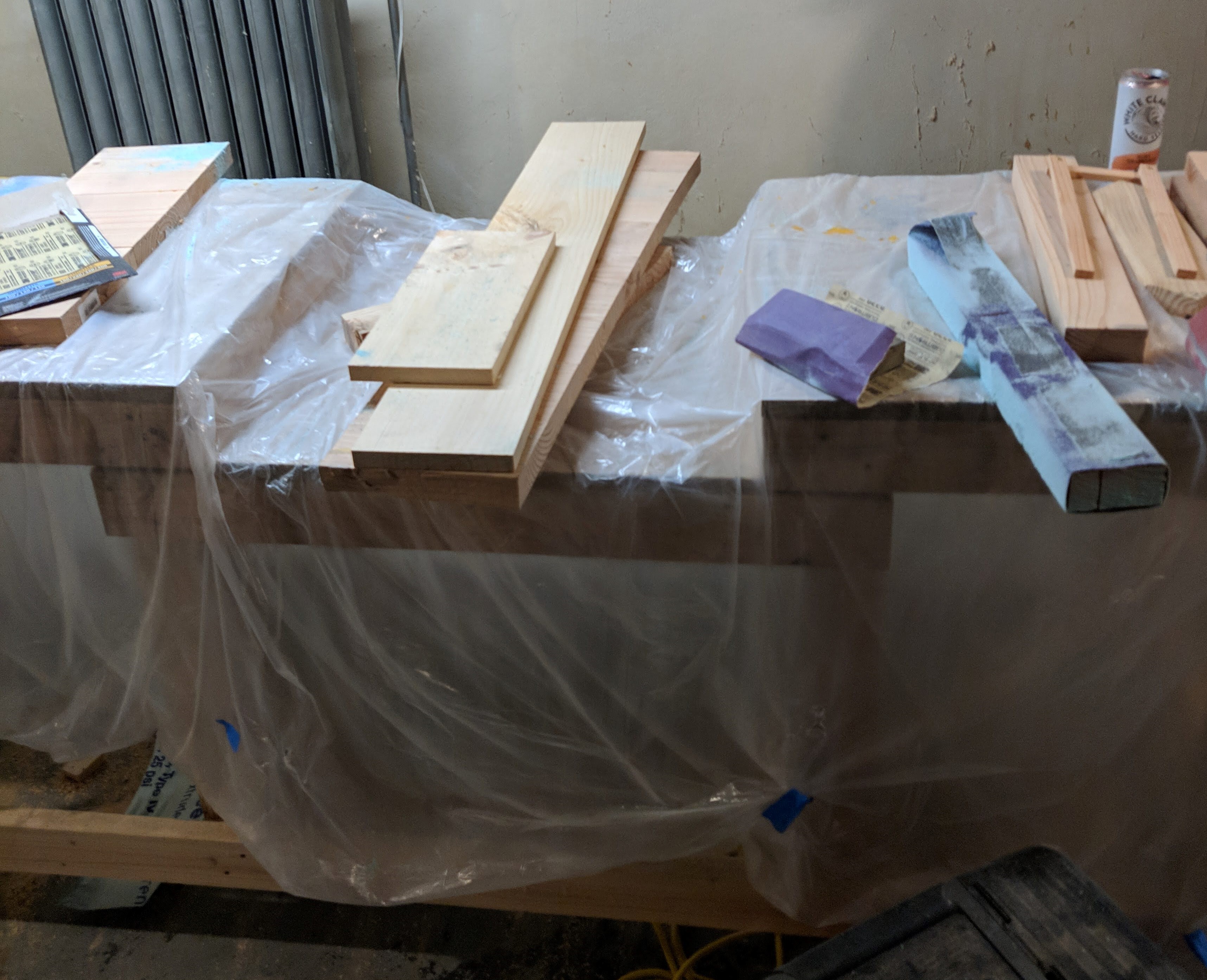
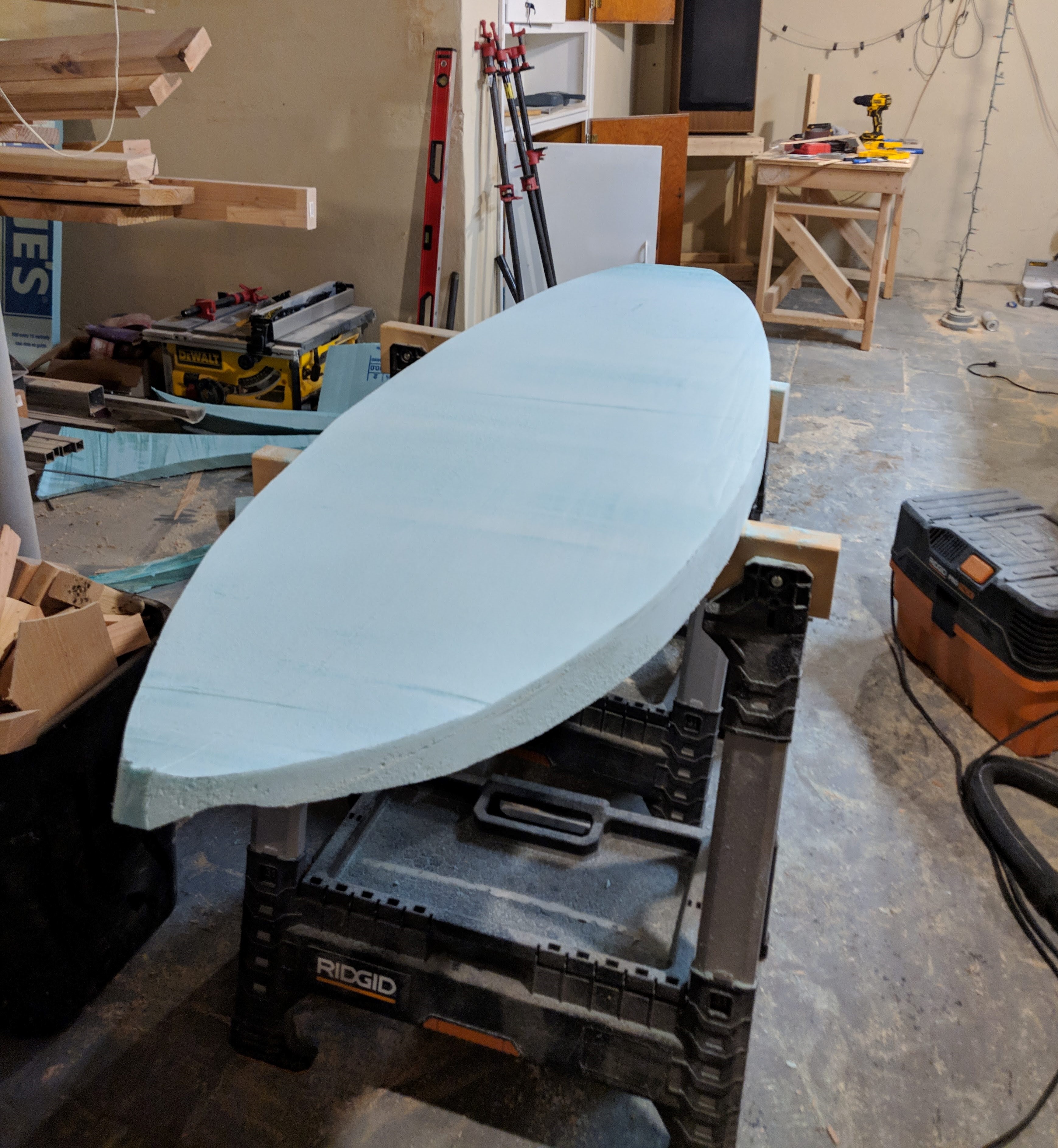
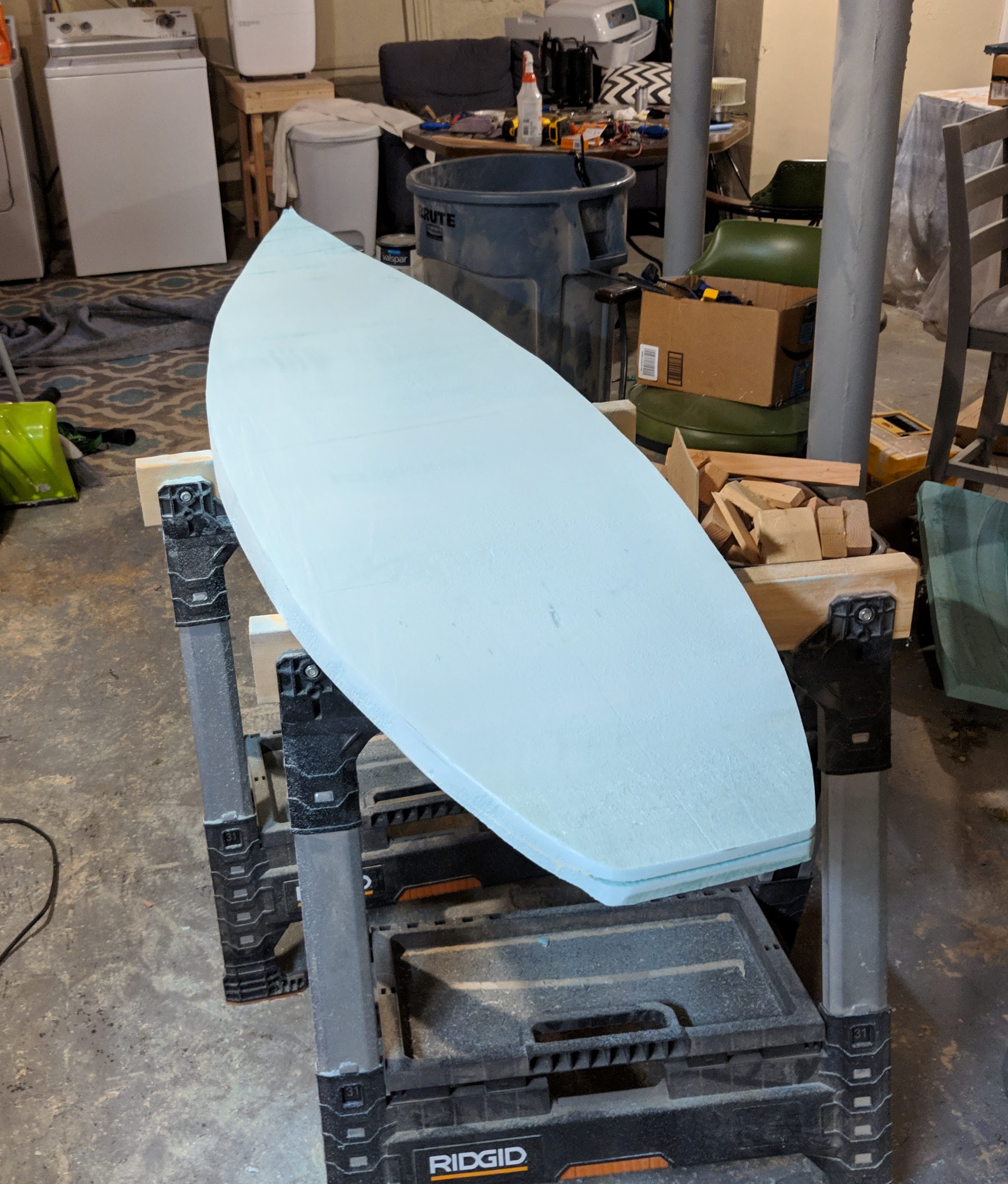
The blank was cut from a sheet of Kingspan GreenGuard XPS foam. Two pieces (~2"×24"×78") were glued together to reach the desired 2.5" thickness, using Original Gorilla Glue on a makeshift rocker table built from stacked boards and clamps. XPS's closed-cell structure makes bonding difficult — in hindsight, 4oz of glue across ~468 in² was nowhere near enough. I'd recommend targeting 150–200 in²/oz and concentrating coverage within the board outline.
Hotwire
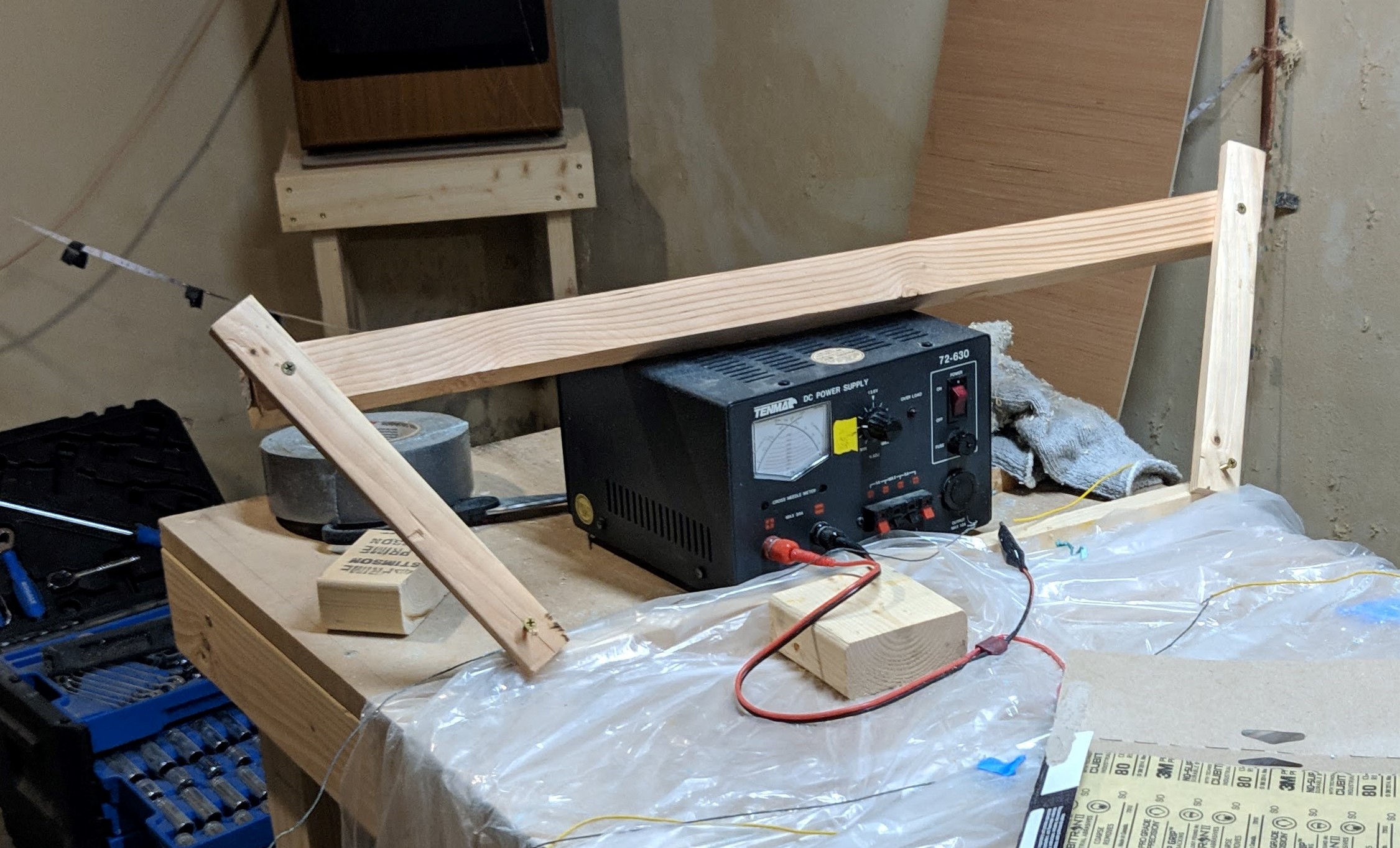
I built a hotwire from a DC power supply, scrap wood, and stranded picture-hanging wire — I'd strongly recommend not using picture wire. The wire broke repeatedly, and one break caused it to sink into the foam below the template, leaving a thin tail area that needed to be re-glued and re-cut.
Shaping
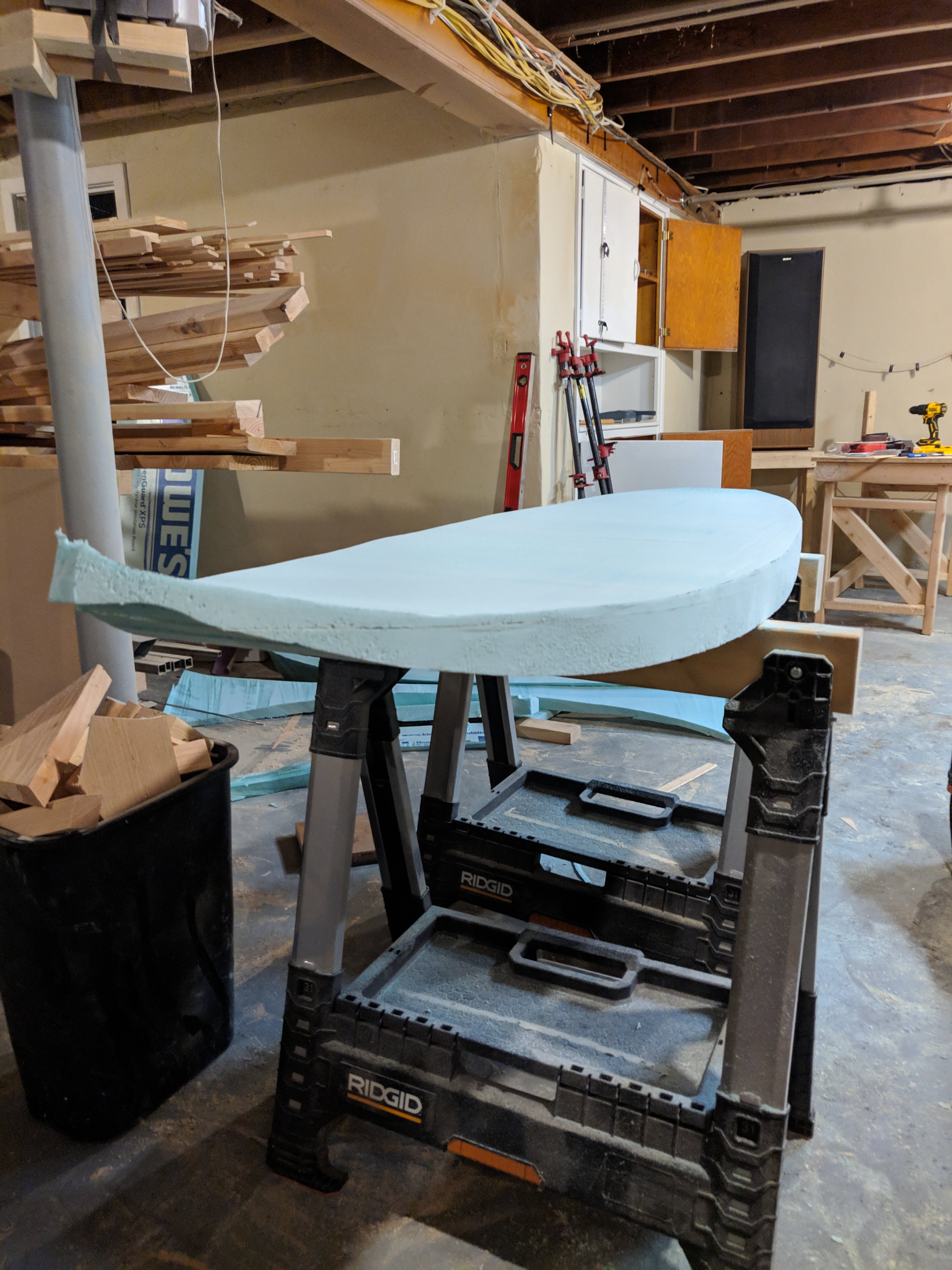
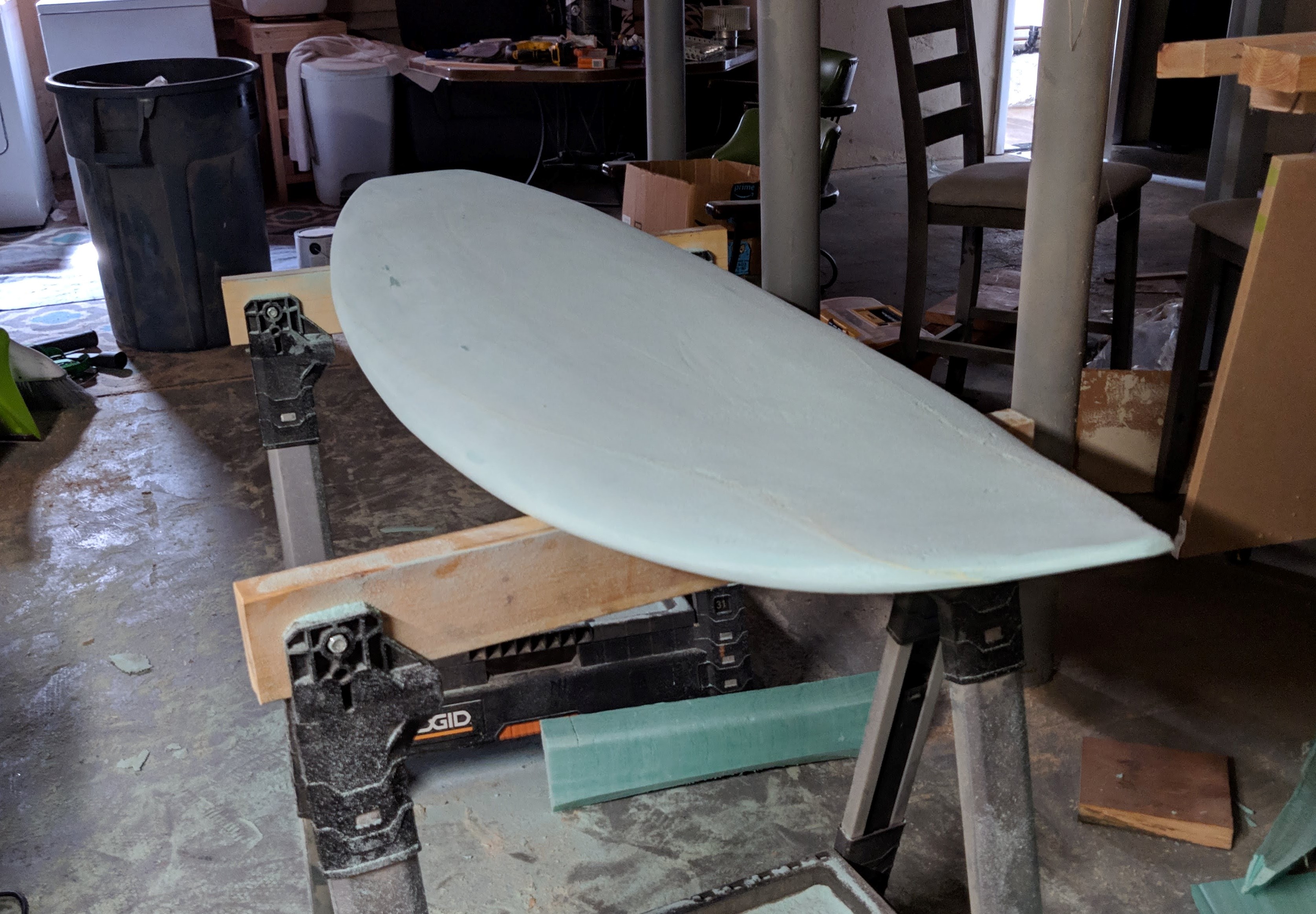
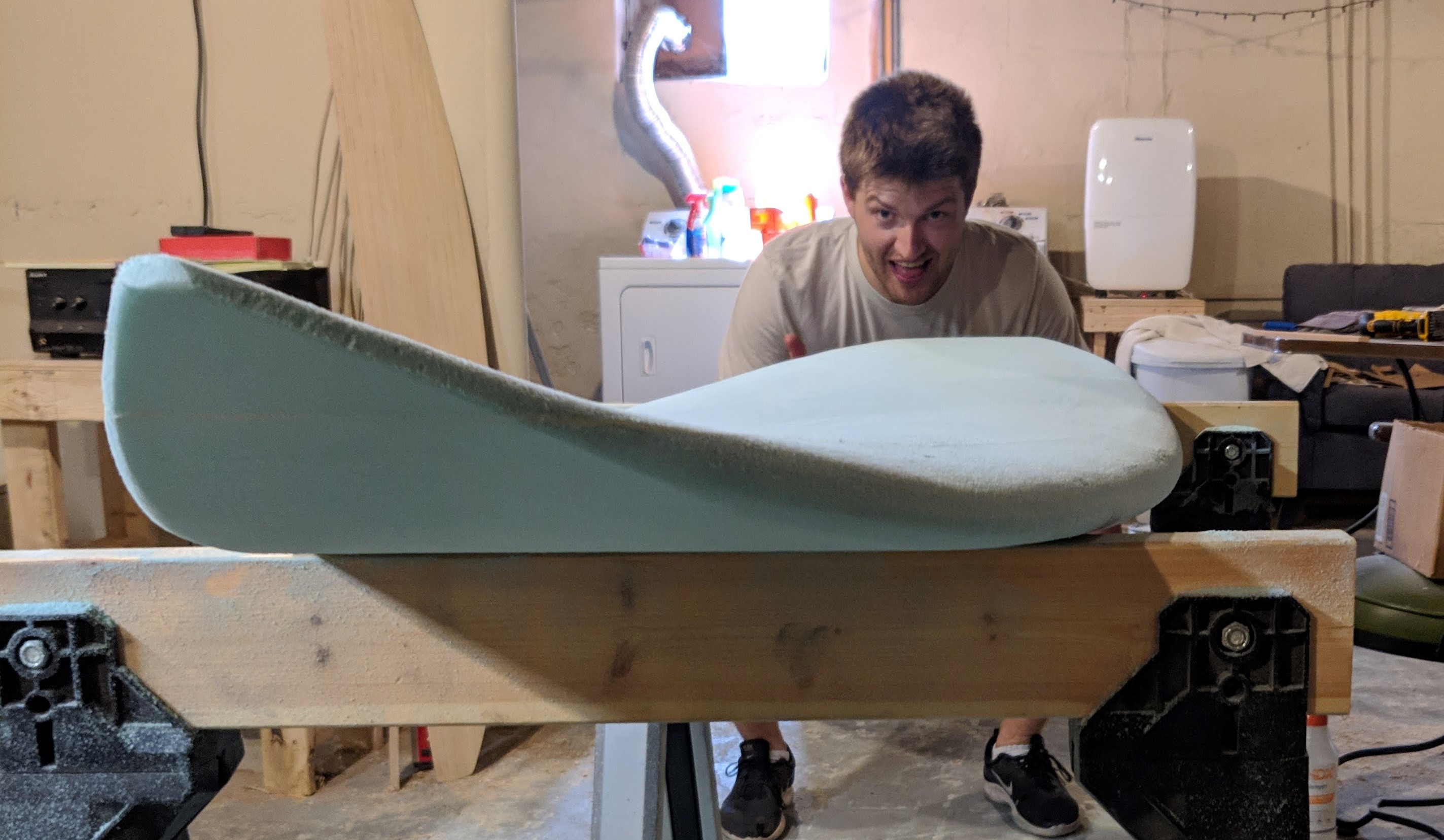
After hotwiring the rocker, I traced the outline and cut it with a close-quarters hacksaw (a fine-toothed pull saw would be better). Rails were shaped using Greenlight's "modern" thin-rail measurements, marked with a batten and cut with a hacksaw, then blended with foam sanding blocks. I added a single concave through the bottom transitioning to flat through the fins.
A significant delamination appeared near the nose during shaping — the glue layer was too thin. I injected additional Gorilla Glue and clamped with foam pads to protect the rough-shaped blank.
Fin Boxes & Leash Plug
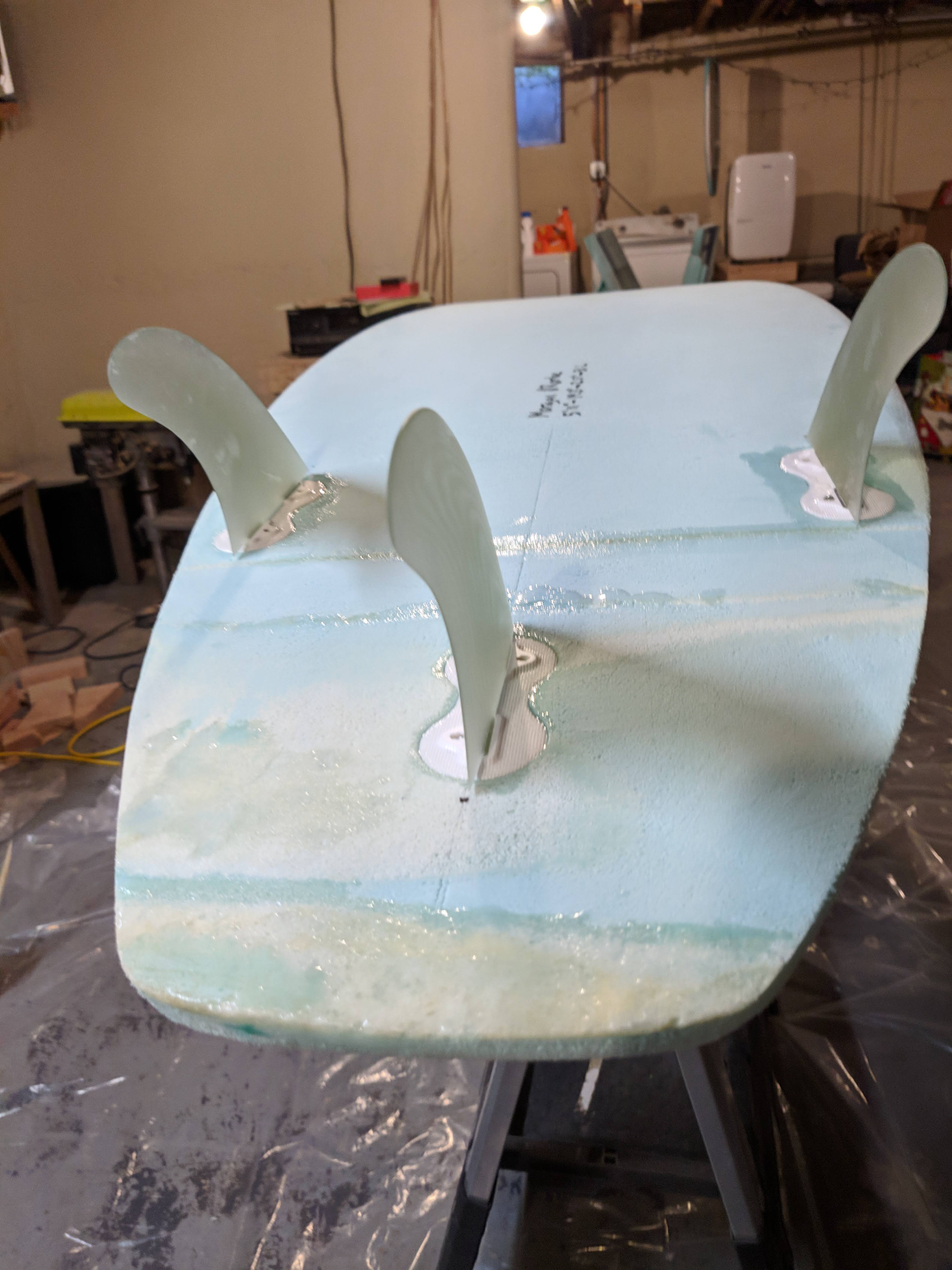
I used FCS Fusions, freehanded with a trim router after practicing on scrap foam. The fit was surprisingly tight and accurate. Boxes and leash plug were set in epoxy/cabosil mix with side fins canted at 7°. Leftover epoxy was used to fill weak Gorilla Glue spots and torn foam near the tail fin.
Laminating
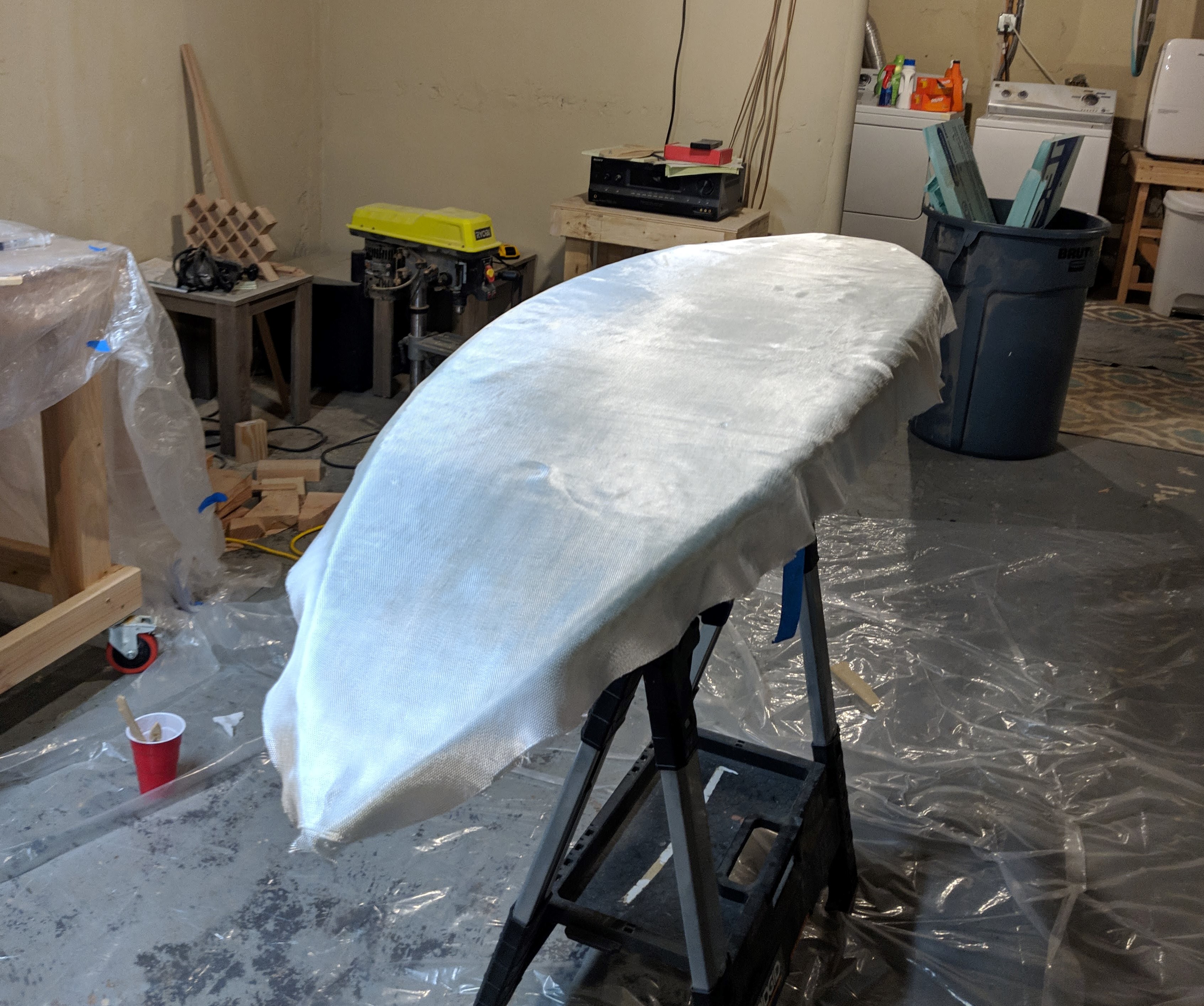
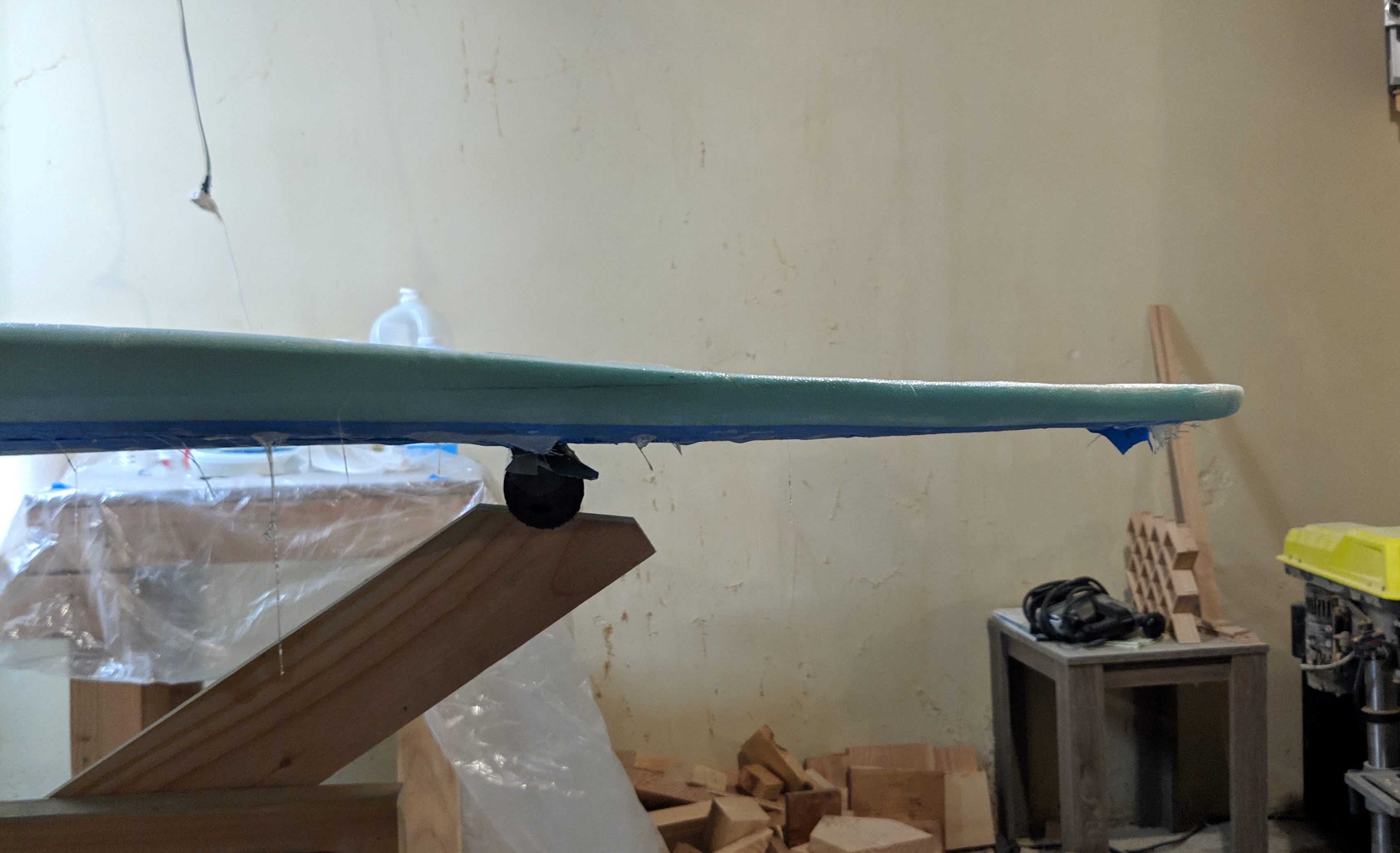
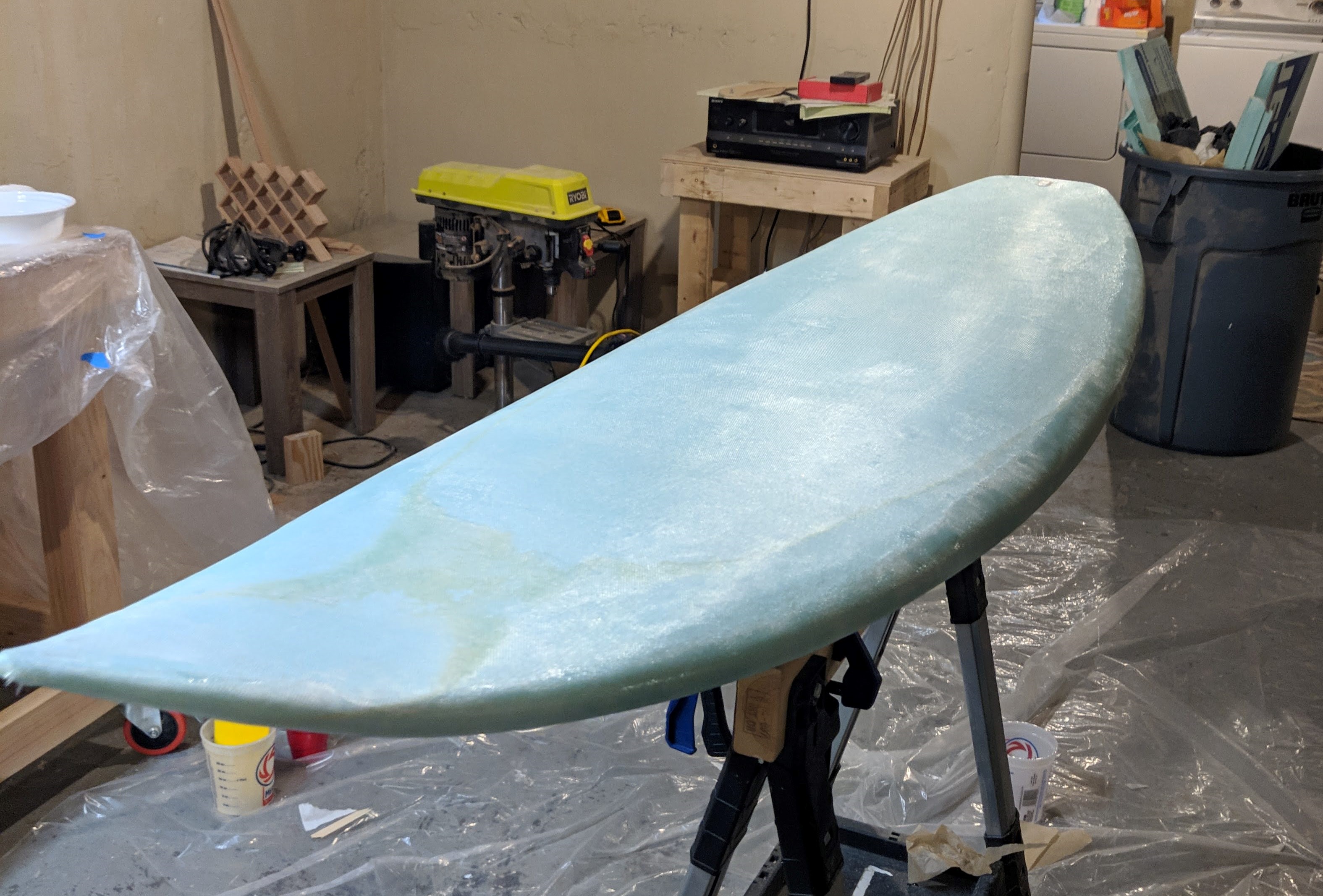
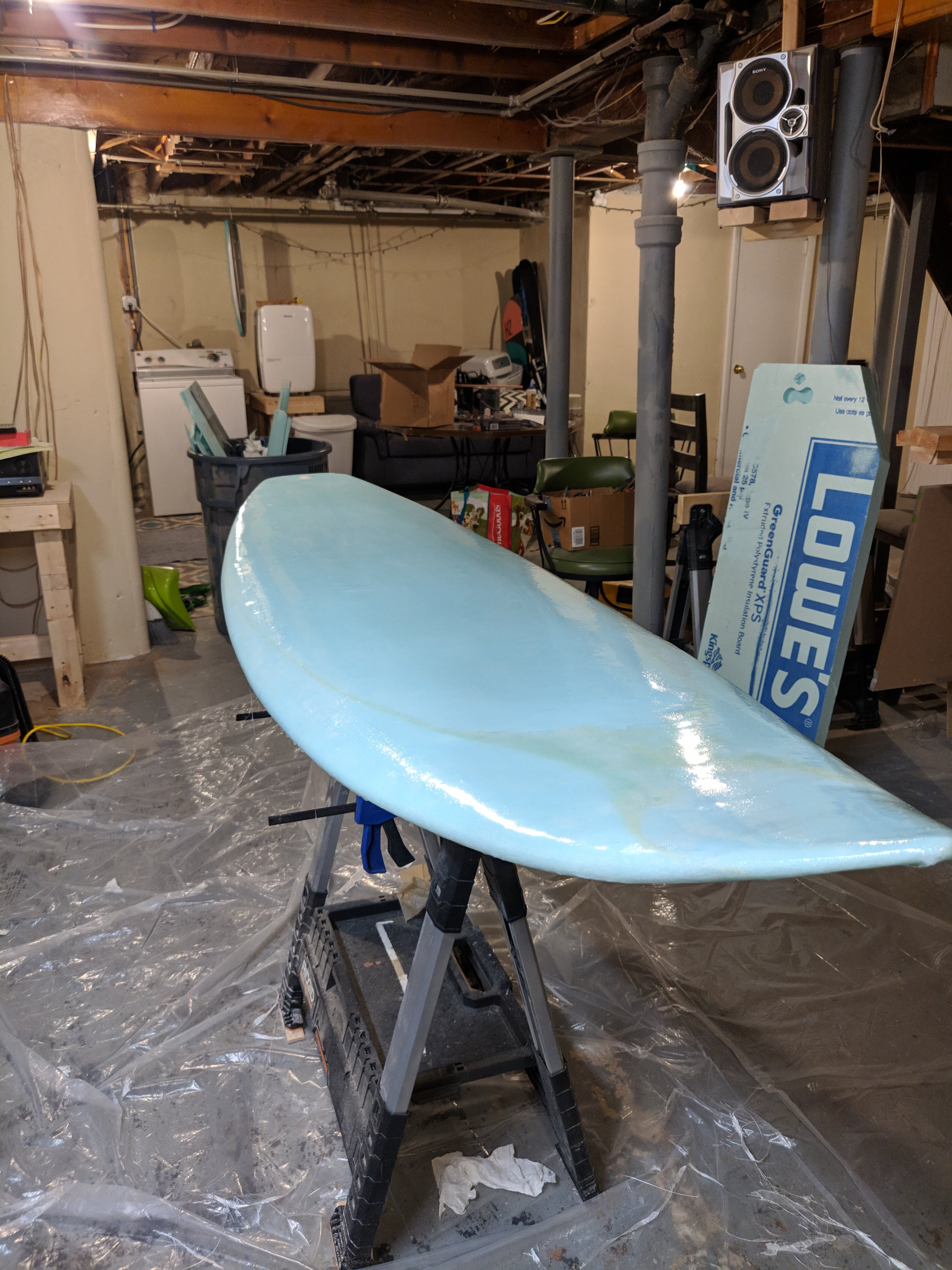
Schedule: 2×4oz E-glass on the bottom, nylon tulle + 3×4oz E-glass on the deck. The tulle fabric creates a resin-rich layer against the foam to reduce delamination risk and increase buckling strength. I calculated resin quantities using m_r = A_f × ρA_f × x with a multiplier of 1.5 (initially tried 1.2, which was insufficient).
During bottom lamination, I used the green-light window to bend rocker back into the tail by placing light weights on parchment paper over the tacky laminate — this worked perfectly with no springback.
Finished Board
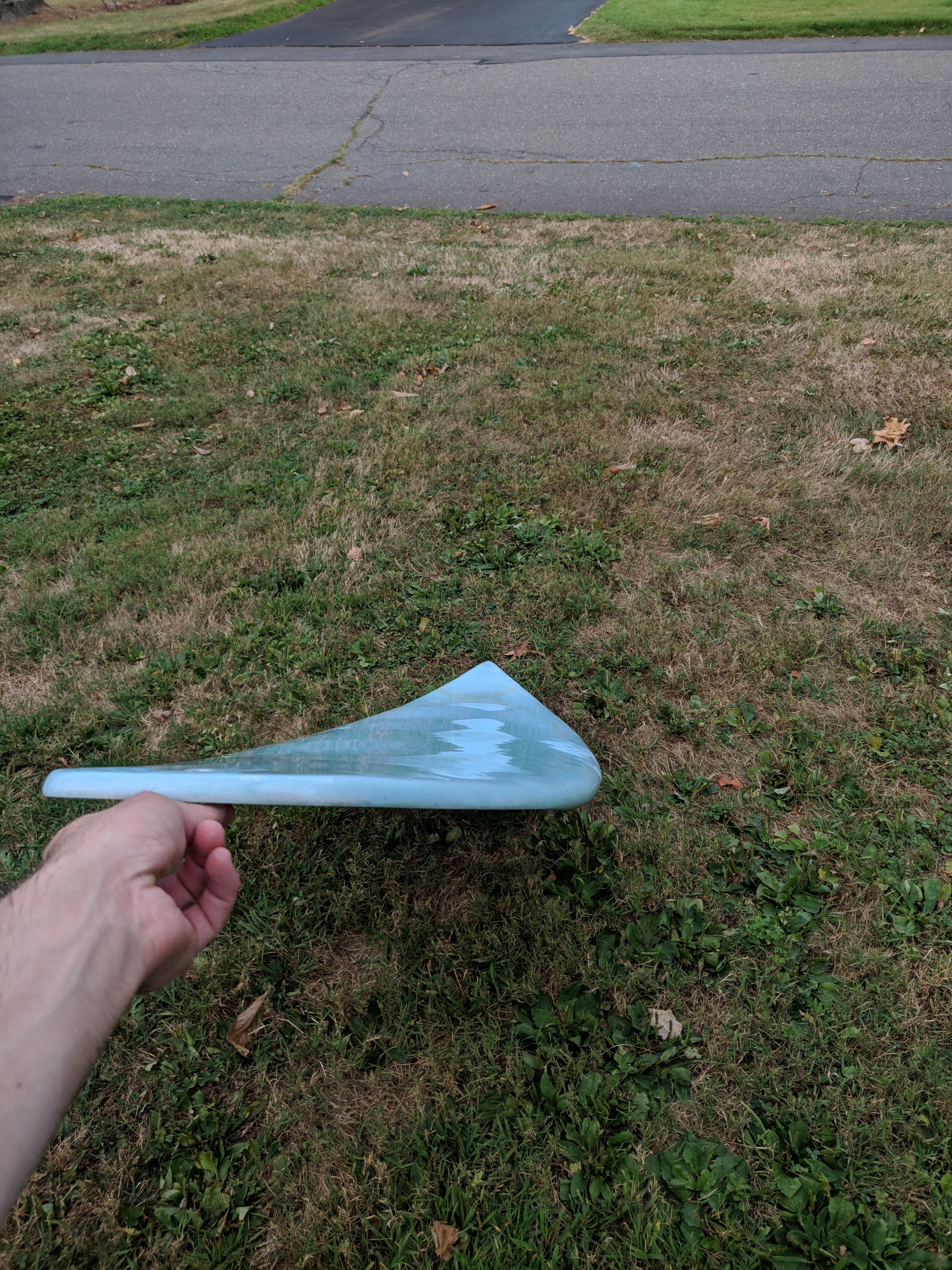
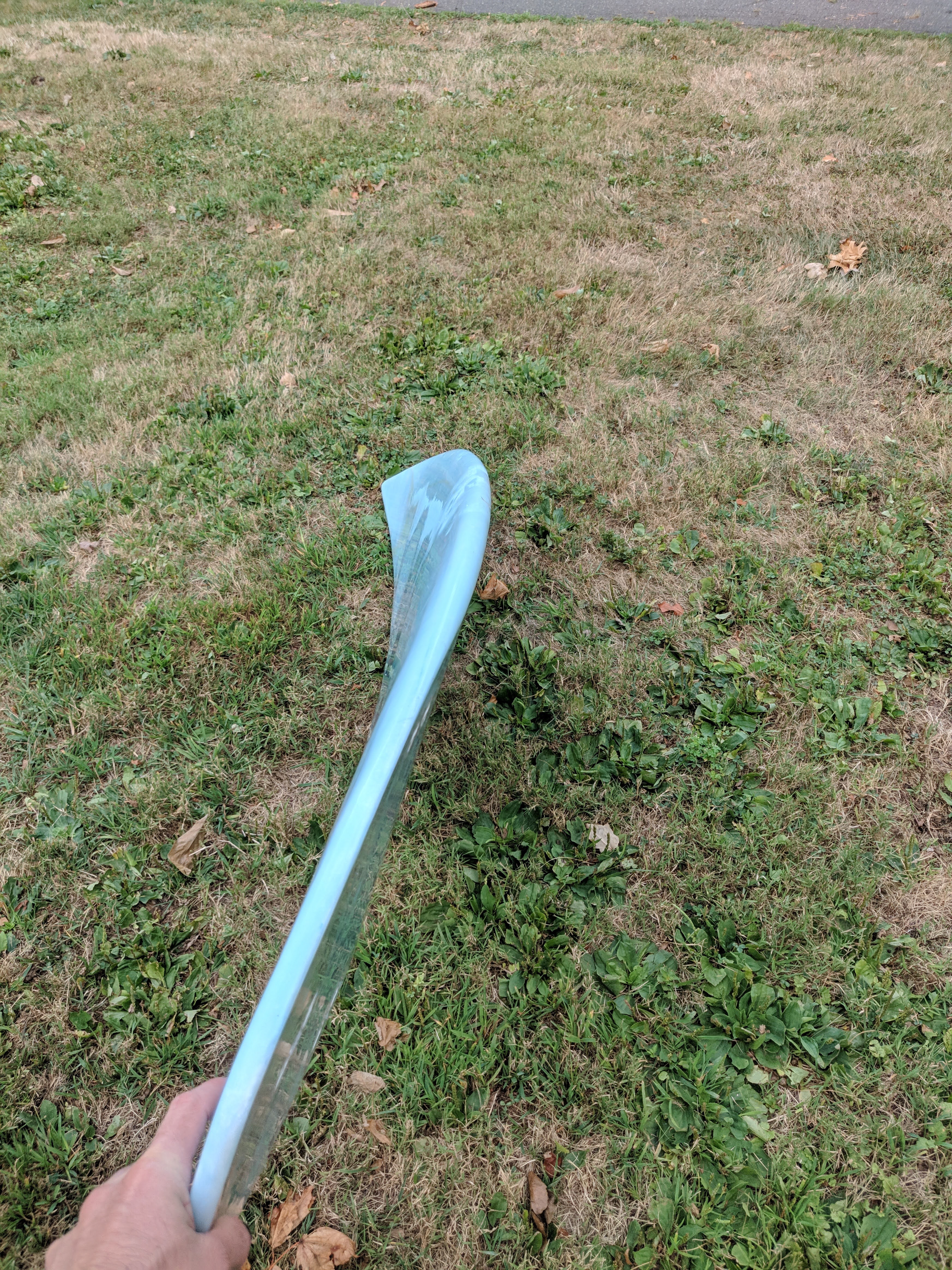
Results
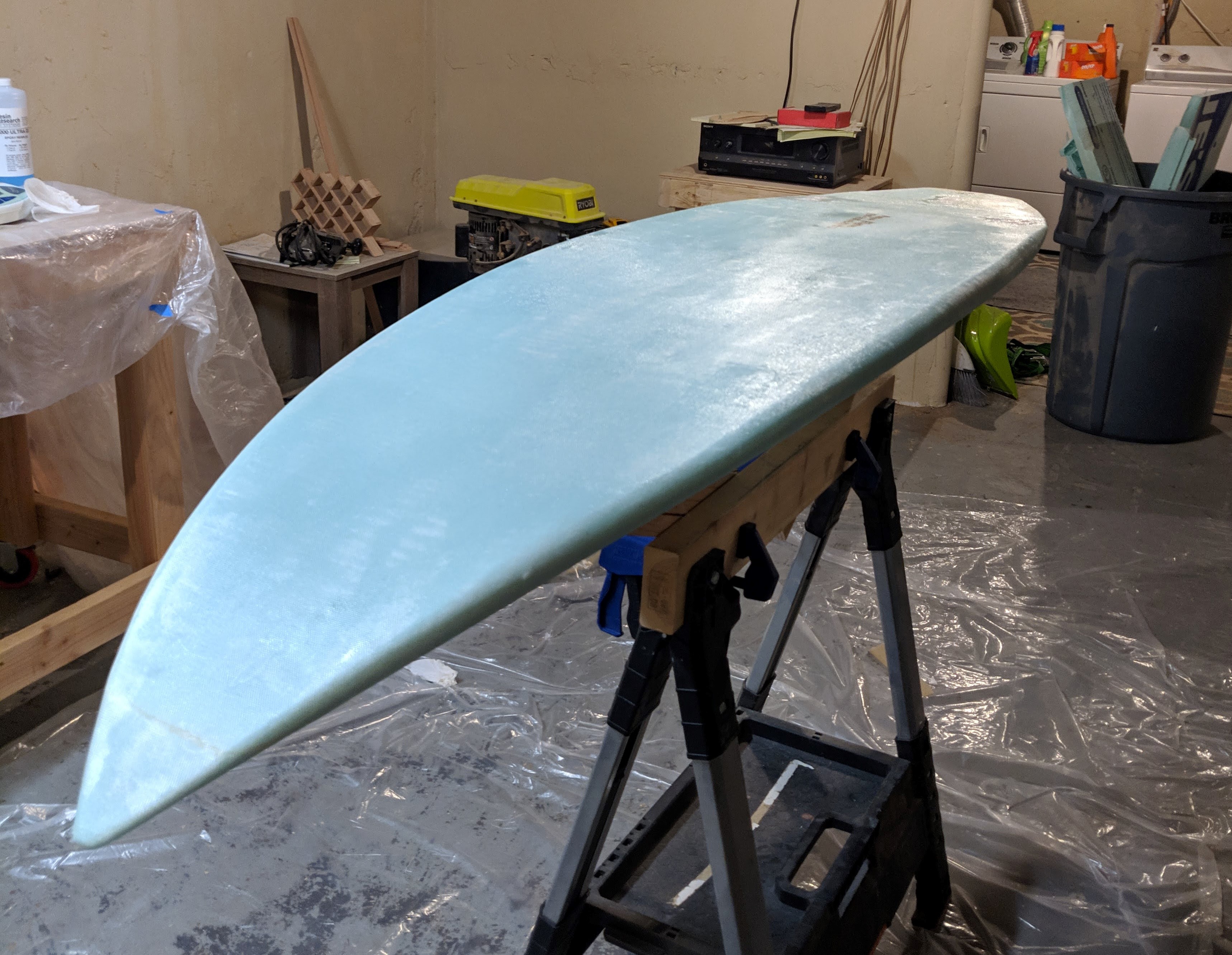
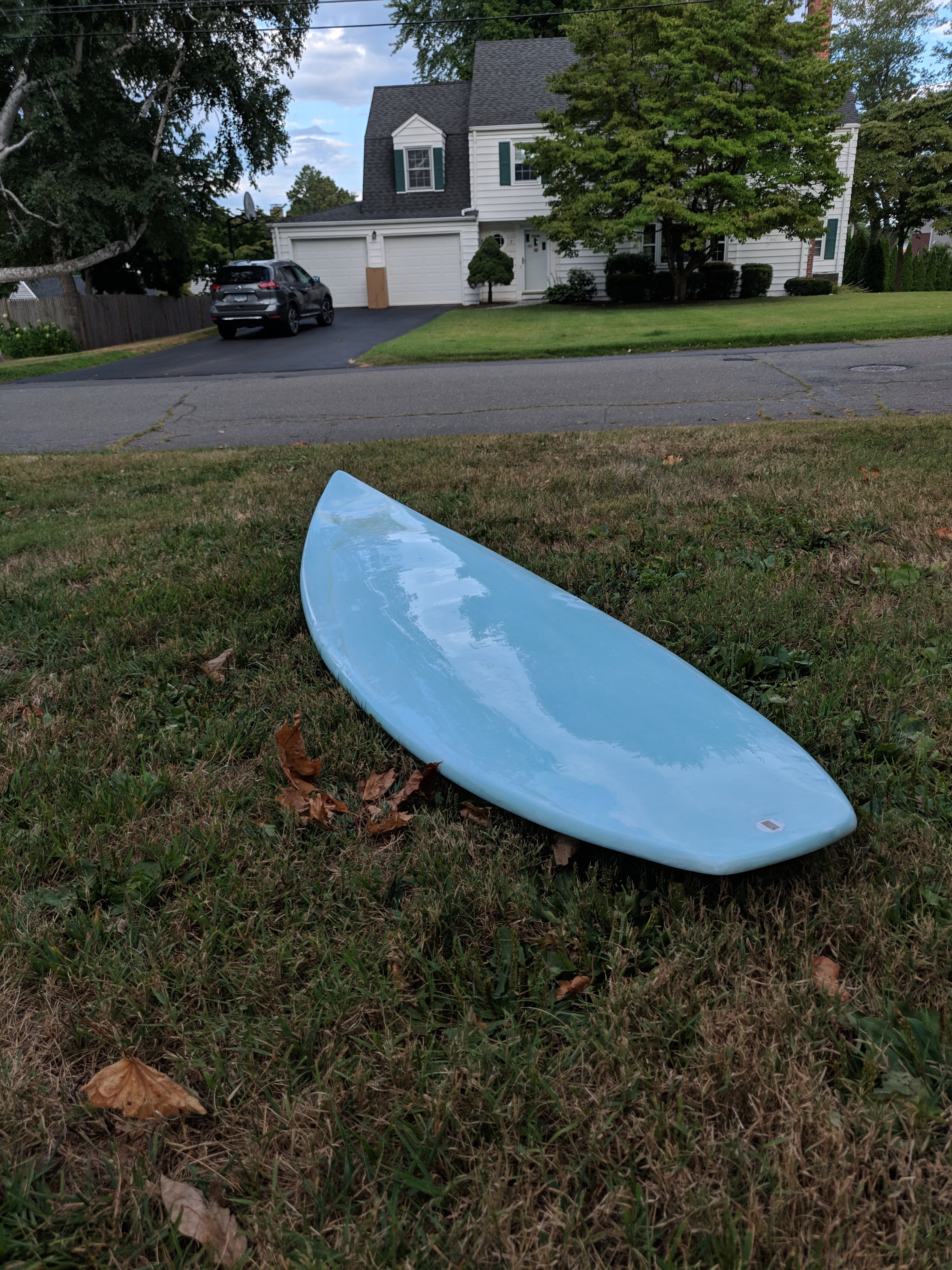
Predicted weight was 5.9 lbs; after sanding the board came out at 5.6 lbs. Four sessions in pumping New England hurricane surf later — including multiple air drops into the flats — still zero pressure dings anywhere on the board.
The board rips. It needs some push to get going, but feels high-performance, light, and responsive underfoot. Volume came in slightly under the target 31L, but paddling is not a problem.